How to Appeal Property Taxes in San Antonio: A Complete Step-by-Step Guide
See the step by step to Appeal Property Taxes in San Antonio, exemptions , trends and how to save money.
If you’re a homeowner in San Antonio, rising property tax assessments might feel overwhelming. Fortunately, appealing your property taxes can help you reduce your tax burden.
This guide covers how to protest property taxes in san antonio, insights into local tax rates, and exemptions, and answers to common questions for navigating the system effectively.
Understanding Property Taxes in San Antonio
Property taxes in San Antonio are determined annually by the Bexar Appraisal District (BCAD). These taxes are calculated using three main factors:
Appraised Value: The market value of your home as assessed by BCAD.
Tax Rate: A percentage determined by local taxing authorities, such as the city, school district, or county.
Exemptions: Reductions in taxable value, including homestead, senior citizen, or disabled veteran exemptions.
San Antonio Property Tax Rates
San Antonio property tax rates vary depending on the taxing entities applicable to your property. For example:
City of San Antonio Rate: 0.55827%
Northside ISD Rate: 1.1946%
Bexar County Rate: 0.27639%
Average Total Property Tax Rate: Approximately 2.10%.
These rates can change annually based on local budgets and voter-approved measures. Areas like Stone Oak (78258) and Alamo Heights (78209) often experience higher property values and corresponding assessments.
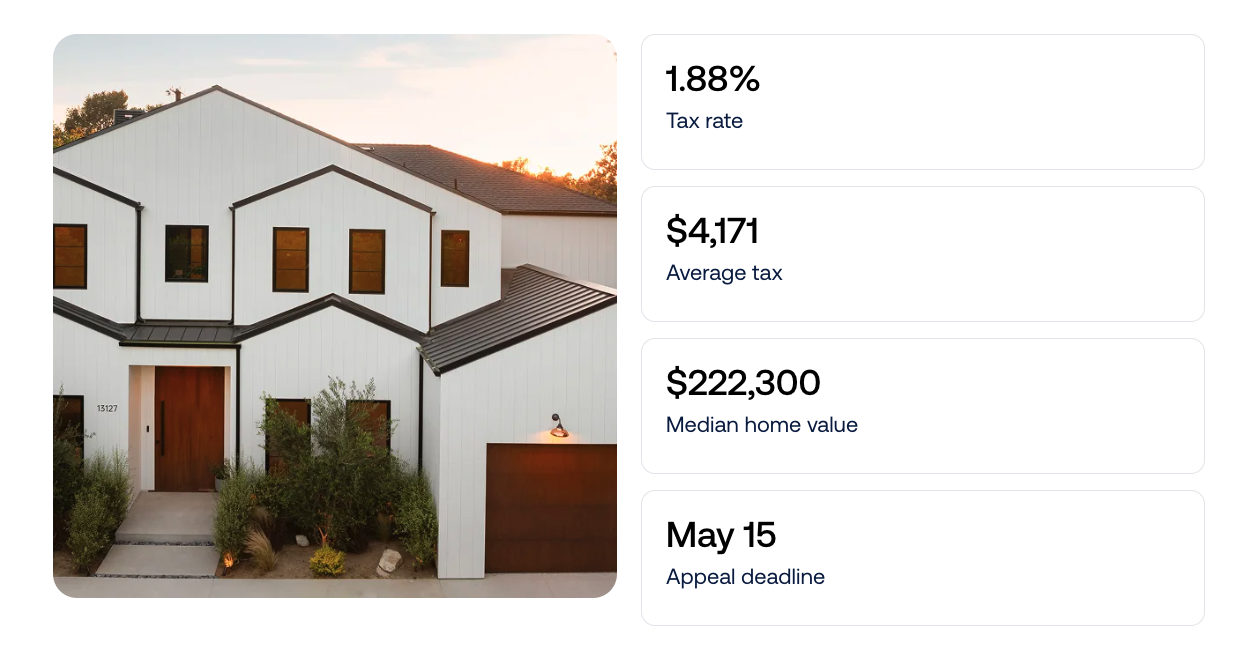
San Antonio property tax info
Popular Zip Codes and Tax Trends
Certain neighborhoods in San Antonio have seen significant increases in property values, resulting in higher tax assessments:
78209 (Alamo Heights): Known for its desirable location and luxury homes.
78258 (Stone Oak): Rapid growth and new developments have driven up property values.
78230 (Shavano Park): Features high-value properties with consistent appreciation.
How to Protest Property Taxes in San Antonio?
Here's your guide to protesting taxes:
Review Your Appraisal Notice
Each spring, BCAD sends appraisal notices with assessed values. Review your notice for:
Appraised Value:Does it accurately reflect your home’s market value?
Property Details: Are there errors in square footage, lot size, or improvements?
What if your appraisal notice contains errors?
Gather evidence such as photos, repair estimates, and recent comparable sales data to support your case.
Decide Whether to Protest
Protesting your property taxes is worth considering if:
Your home’s appraised value exceeds its market value.
Comparable homes in your neighborhood are assessed lower.
Errors exist in your property’s description or condition.
Should you protest your taxes every year?
Yes. San Antonio property owners can file a protest annually to ensure their assessments remain fair and accurate.
However, most homeowners wonder how to protest property taxes in Bexar County.
File Your Protest
The protest deadline is May 15th or within 30 days of receiving your appraisal notice. File through:
The strength of your protest lies in your evidence. Effective documentation includes:
Comparable Sales Data: Recent sales of similar properties in your zip code (e.g., 78258 or 78209).
Independent Appraisals: Professional assessments showing your home’s fair market value.
Photos: Visual evidence of damage or needed repairs, such as foundation cracks or roof issues.
Attend the Informal Review
During an informal review, you’ll meet with a BCAD appraiser to present your case. Often, this step can lead to a reduction in your property’s appraised value without the need for a formal hearing.
What happens during an informal review?
Present your evidence to the appraiser.
Discuss any discrepancies in the assessed value.
If no agreement is reached, your protest will proceed to the formal hearing stage.
Prepare for the Formal ARB Hearing
The Appraisal Review Board (ARB) hearing is your opportunity to present your case to a panel of independent reviewers. During the hearing:
Clearly explain why your home’s appraised value is incorrect.
Use data and visuals to support your argument.
Be prepared to answer questions about your property.
What happens if you’re dissatisfied with the ARB decision?
You can pursue binding arbitration or file a court appeal for further review.
Rising Home Values: Neighborhoods like Downtown San Antonio (78205) and Castle Hills (78213) are seeing higher property tax bills due to increased demand.
New Developments: Suburban areas like Cibolo (78108) are experiencing rapid growth, leading to higher assessments.
Legislative Changes: Recent laws cap annual appraisal increases for homestead properties at 10%.
How Abode Money Can Help
Navigating the property tax appeal process can be complicated, but Abode Money makes it easier:
Local Data Access: Compare sales and assessments in your area.
Streamlined Filing Tools: Submit your protest quickly and accurately.
Exemption Assistance: Ensure you’re taking full advantage of available tax savings.
Abode Money is essentially a technology-forward property tax consultant in San Antonio.
Final Thoughts
Appealing your property taxes in San Antonio can save you money and ensure your property is fairly assessed.
By following this guide and leveraging tools like Abode Money, you can simplify the process and improve your chances of success.

.jpg)